 Image 1 of 1
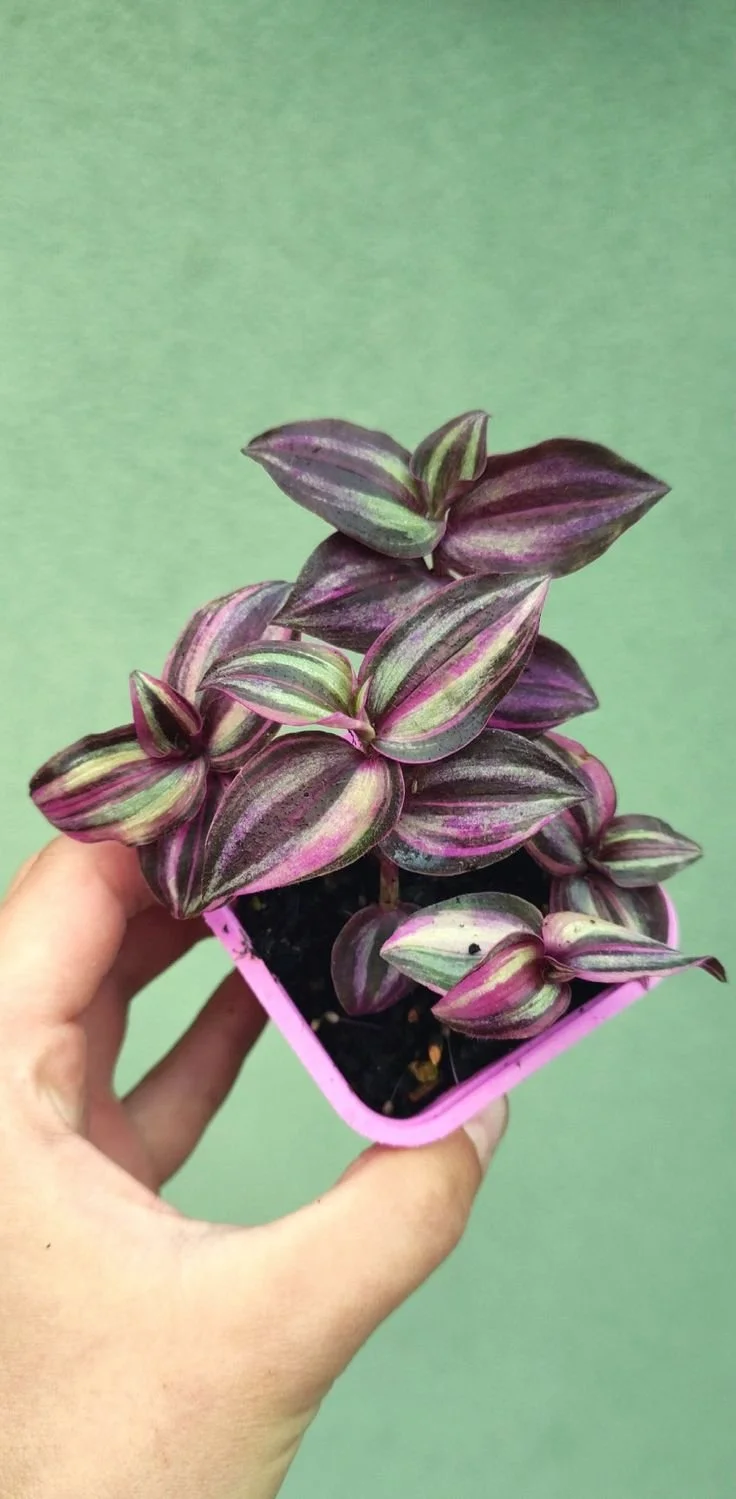
HappiLee, also know as Danny Lee or the silver inch plant, is a mutation of tradescantia zebrina found at the costa farms USA in 2018. Its mother plant, Tradescantia Zebrina, is primarily native to central America, Mexico and parts of Columbia. Known for its distinctive foliage featuring green, purple and silver tones.
For vibrant foliage, bright indirect sunlight is recommended to maintain purple and silver tones, though HappiLee can adapt to lower light resulting in darker green foliage. High light levels may require more frequent watering, lower light will require less.
Thrives best in well-draining soil blend of 50/50 mix standard potting soil and perlite, course sand, or coco coir. Water This plant loves water but doesn’t want to be swimming, ensure your pot has drainage holes to prevent root rot, yellow spotting on leafs, and mushy stems.
Water once a week or when top inch of soil dries out. HappiLee prefers high humidity (40 - 60%), they can handle average home humidity comfortably.
HappiLee is fast growing with shallow roots so does not require deep pots. A great option for a hanging basket, exhibiting their cascading vines.
HappiLee on average will grow 6-12 inches in hight, and vines can trail up to 6 feet.
HappiLee typically looks best for 2-3 years before becoming leggy, requiring propagation to refresh the plant.
Regularly pinch back the stems to encourage new growth and prevent the plant from becoming too long, thin, and leggy.
Considered mildly toxic to pets and humans if ingested, and the sap can cause skin irritation.
Consult a vet or doctor if ingested.
HappiLee, also know as Danny Lee or the silver inch plant, is a mutation of tradescantia zebrina found at the costa farms USA in 2018. Its mother plant, Tradescantia Zebrina, is primarily native to central America, Mexico and parts of Columbia. Known for its distinctive foliage featuring green, purple and silver tones.
For vibrant foliage, bright indirect sunlight is recommended to maintain purple and silver tones, though HappiLee can adapt to lower light resulting in darker green foliage. High light levels may require more frequent watering, lower light will require less.
Thrives best in well-draining soil blend of 50/50 mix standard potting soil and perlite, course sand, or coco coir. Water This plant loves water but doesn’t want to be swimming, ensure your pot has drainage holes to prevent root rot, yellow spotting on leafs, and mushy stems.
Water once a week or when top inch of soil dries out. HappiLee prefers high humidity (40 - 60%), they can handle average home humidity comfortably.
HappiLee is fast growing with shallow roots so does not require deep pots. A great option for a hanging basket, exhibiting their cascading vines.
HappiLee on average will grow 6-12 inches in hight, and vines can trail up to 6 feet.
HappiLee typically looks best for 2-3 years before becoming leggy, requiring propagation to refresh the plant.
Regularly pinch back the stems to encourage new growth and prevent the plant from becoming too long, thin, and leggy.
Considered mildly toxic to pets and humans if ingested, and the sap can cause skin irritation.
Consult a vet or doctor if ingested.